
Gratitude as a methodology - not just a sentiment
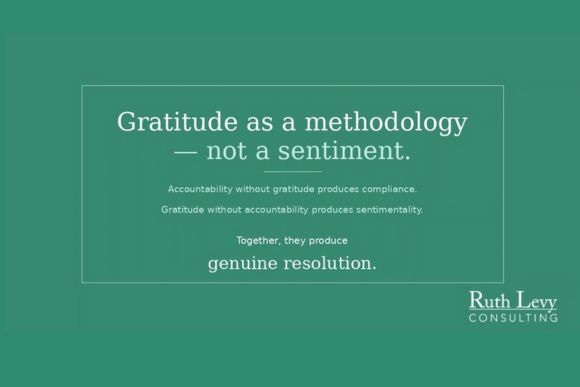
Expression of gratitude and accountability are the two interventionist questions at the heart of the Restorative Mediation model.
What I've observed is that when people are in conflict, they stop seeing the whole person. They only see the wrongdoing - and often they are unable to be in the same room, let alone look at each other. They forget that before all of this, there may have been something genuine: respect, collaboration, even reliance.
Gestalt therapy describes the concept of focus and periphery. In conflict, what we don't like about someone is sharply in focus. What we might still appreciate about them recedes to the periphery. Gratitude is the mechanism that reverses this.
Participants are mostly surprised when I ask, towards the end of the individual session: is there anything you appreciate or value about the other person? That question is then reflected on overnight - and introduced as part of the structure of the combined session.
There is something quite remarkable about what this question does in a room. It creates a softness, a kindness - sometimes even laughter, or tears - as people begin to re-humanise each other.
Gratitude doesn't resolve the conflict. It creates the opening through which resolution becomes possible. It reminds each person - often for the first time in months - that they are not sitting across from an adversary. They are sitting across from a colleague who is also struggling. That shift re-sets the emotional tone in the room and makes the work of accountability possible.
That distinction matters - because gratitude and accountability are not interchangeable, and neither is sufficient alone.
When someone is held accountable without any accompanying experience of being valued as a person, the response tends to be purely transactional. They'll say the right things and agree to the right behaviours - but there's no genuine shift. They're complying because they have to, not because something has moved inside them. Accountability without gratitude produces compliance.
The reverse is equally limited. If a session generates warmth - but never actually addresses what happened and who did what - the good feeling is built on nothing solid. People leave feeling better without having understood anything. The same patterns will resurface. Gratitude without accountability produces sentimentality.
Together, they produce something that holds. The gratitude creates the safety that makes accountability bearable rather than threatening. The accountability gives the gratitude somewhere to land - grounding the warmth in truth, in actual acknowledgment of what occurred.
Together, they produce genuine resolution. That's why both are foundational to the model.